When will coal power stations close? What it means for your next electricity contract
JPMorgan expects four east coast coal plants to run up to five years longer, while AEMO sees earlier exits. Here is what has been forecast, why the dates keep shifting and what it means for your next electricity contract.
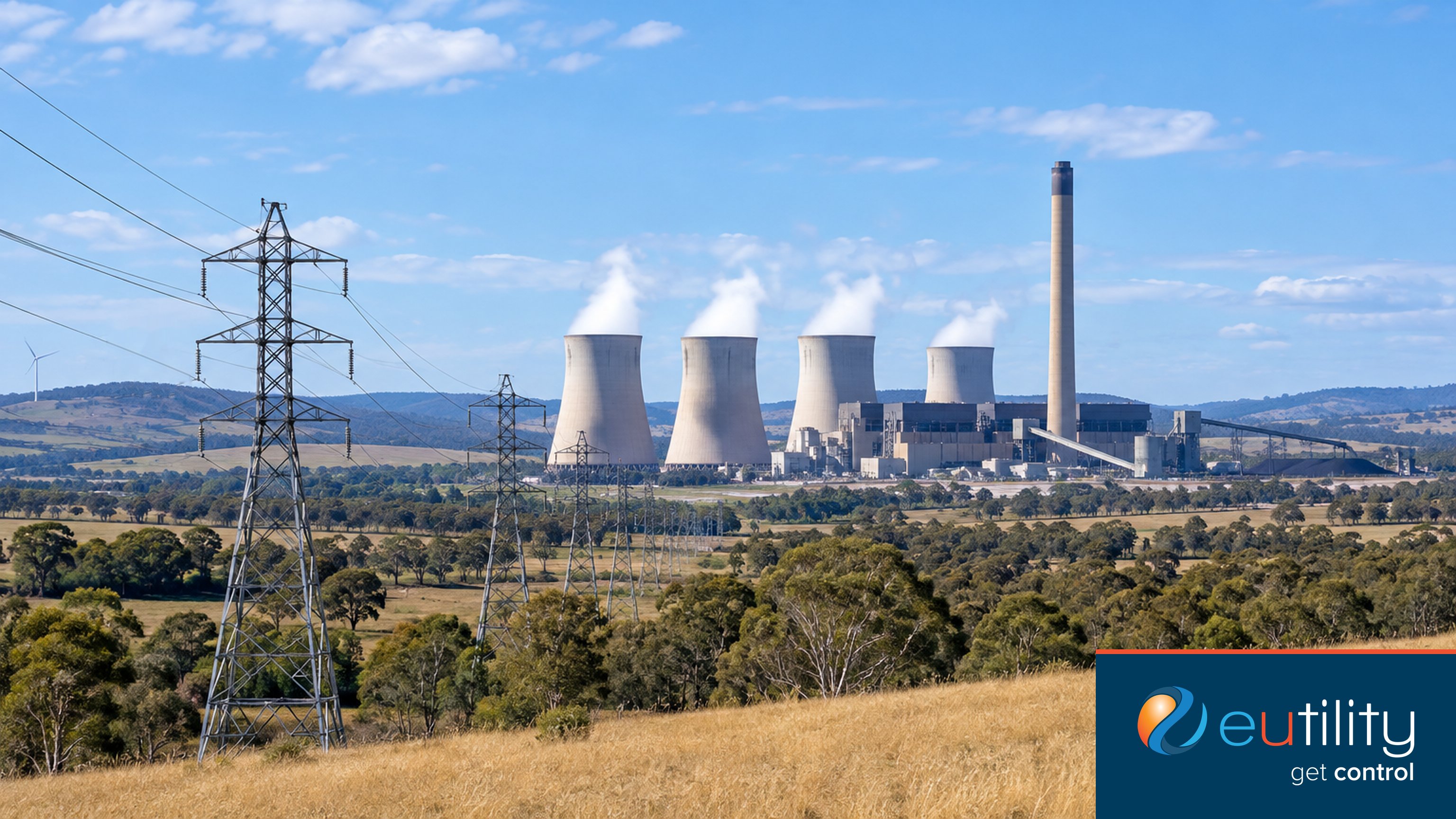
- JPMorgan expects four east coast coal plants, over 9GW, to run up to five years longer than planned.
- AEMO estimates up to 60% of east coast coal generation could retire by 2030, and the owners say their dates stand.
- Uncertain closure dates feed into forward wholesale prices and the contract offers built on them.
- Contracts ending in 2027 or 2028 go to market while these dates are still unsettled, so plan early.
No one can yet say when the east coast's largest coal power stations will close. Current plans retire Yallourn in mid-2028, Eraring in April 2029, Bayswater by the end of 2033 and Loy Yang A in mid-2035. JPMorgan expects extensions of up to five years, while AEMO estimates up to 60% of east coast coal generation could retire by 2030.
For businesses buying electricity, that uncertainty matters more than any single forecast. Closure dates feed into the wholesale prices behind every contract offer, and many contracts come up for renewal in 2027 and 2028 while these dates are still unsettled.
What has JPMorgan forecast for east coast coal plants?
In analysis reported by the Australian Financial Review on 13 November 2026, JPMorgan's energy analysts assume four plants owned by AGL, Origin and EnergyAustralia, with more than 9GW of combined capacity, stay open longer than planned. They expect state governments to support extensions to keep wholesale prices in check. All four plants are in the National Electricity Market (NEM), the grid that serves eastern and southern Australia.
| Plant | Owner | Planned closure | JPMorgan assumption |
|---|---|---|---|
| Yallourn (VIC) | EnergyAustralia | Mid-2028 | Extended beyond 2028 |
| Eraring (NSW) | Origin | April 2029 | Extended to 2031 |
| Bayswater (NSW) | AGL | End of 2033 | Around five years longer |
| Loy Yang A (VIC) | AGL | Mid-2035 | Around five years longer, to 2040 |
Eraring is Australia's largest coal plant, with 2.9GW of capacity and about 13TWh of generation a year. Origin has pushed its closure back twice, most recently in January 2026, when it moved the date from August 2027 to 30 April 2029. JPMorgan thinks a third extension, backed by the NSW Government, is likely. UBS and Jarden analysts also expect Eraring to keep running until 2030 or later.
What do AEMO and the plant owners say?
AEMO expects coal to leave sooner. By its estimate, up to 60% of the east coast's coal generation could be retired by 2030, well ahead of the timeline in JPMorgan's analysis.
The plant owners are also sticking to their published dates. Origin says its plan for Eraring has not changed, and EnergyAustralia's chief executive has repeatedly said Yallourn will close in April 2028 as planned. AGL still plans to close Bayswater by the end of 2033 and Loy Yang A in mid-2035.
That leaves businesses working with several credible but conflicting views of when this capacity will leave the market.
Why are coal closure dates so hard to pin down?
Closure dates now depend on policy and project delivery as much as on the economics of each plant. New renewable generation is arriving more slowly than planned, and JPMorgan points to the slow pace of new projects in NSW in particular. Replacement is also costly: JPMorgan puts the cost of replacing Eraring's output with wind at up to $20 billion, for roughly 5GW of new capacity.
Snowy 2.0, the 2.2GW pumped hydro scheme designed to store energy for when wind and solar output falls, is now expected in late 2029 after a further 12-month delay. When it was announced in 2017, it was due in 2021. AEMO is reworking its 10-year reliability forecast to reflect the delay and expects to publish the update in early December.
Victoria goes to the polls on 28 November, and the major parties' energy policies differ, including on whether to extend coal plants and on transmission projects. A 2021 agreement between EnergyAustralia and the Victorian Government underpins Yallourn's operation until 2028, and some industry executives expect that arrangement could be reopened after the election.
Demand is rising at the same time. AEMO's 2026 Electricity Statement of Opportunities forecasts data centre electricity use to grow about seven-fold, from around 5TWh today to 34TWh by 2035-36.
How do coal closure dates affect business electricity prices?
Coal closure dates feed into the price of your next electricity contract. Retailers build their offers on forward wholesale prices, including ASX electricity futures (contracts that lock in a wholesale price for a future period), and those prices move as expectations about supply change.
A large plant leaving earlier than expected tightens supply and can push forward prices up. Keeping a plant open longer can relieve short-term pressure on prices and reliability, but it makes Australia's 2035 goal of cutting emissions by 62% to 70% below 2005 levels harder to reach. Uncertain dates also make forward price curves less reliable and complicate hedging decisions. Retailers carry more of that risk, and it can show up in the prices and terms they offer.
Scale matters here. Eraring produces about 13TWh a year, so moving its closure from 2029 to 2031 changes the NSW supply outlook across that whole period. Yallourn's 1.45GW plays a similar role in Victoria.
Which businesses are most exposed?
Organisations with electricity contracts ending in 2027 or 2028 are most exposed, because they will go to market while these dates are still unsettled. A contract signed then may run across both Yallourn's planned mid-2028 closure and Eraring's planned April 2029 closure.
Sites in NSW and Victoria are closest to the impact, since all four plants sit in those states. Large energy users have the most at stake in dollar terms, because small moves in forward prices add up quickly across high consumption.
What can businesses do now?
No one can confirm the closure dates yet, so the practical goal is a contract strategy that still holds up if they move.
- Map your contract end dates. List each site's contract expiry and state, and flag any contracts ending in 2027 or 2028.
- Plan your procurement timeline early. Retailer offers are typically valid for only 2 to 7 days, so internal approvals need to be ready before you go to market.
- Compare contract terms as well as price. Contract length, volume flexibility and roll-in and roll-out provisions all affect how exposed you are if market conditions shift.
- Compare buying strategies. For large users, usually above 20GWh of electricity a year, an alternative to a fixed contract is progressive purchasing, which spreads price risk over time instead of fixing it at one point. It isn't the right fit for every large user, so compare both before you decide. Read more on how progressive purchasing works.
- Watch the next milestones. The Victorian election on 28 November and AEMO's updated reliability outlook in early December could both change the outlook.
How can Eutility help?
If you'd like to understand how shifting closure dates may affect the timing and structure of your next electricity contract, the Eutility team can help, independently of any retailer.
Eutility is an independent, Australian-owned energy consultancy that has advised businesses since 1979 and holds AFSL 480703. It supports more than 2,000 businesses across 41,000+ sites with business energy procurement and energy management services.
Eutility's SmartProcure service runs a blind, competitive tender across the major retailers and compares every offer like for like across contract-term options. For larger energy users, an alternative strategy is progressive purchasing, which spreads purchases over time instead of fixing the whole price at one point. Speak to our SmartTrading team, Eutility's AFSL-licensed trading service, to compare strategies, see how progressive purchasing differs from a fixed contract and find the approach that's right for you.
Call 1800 676 098 or email customerservice@eutility.com.au.
Sources
- Australian Financial Review, Multi-year coal plant extensions needed to stop power price spikes, 13 November 2026, subscription required (accessed November 2026).
- Australian Energy Market Operator, 2026 Electricity Statement of Opportunities, 25 August 2026 (accessed November 2026).
- Origin Energy, Origin extends Eraring Power Station operations to 2029, ASX announcement, 20 January 2026 (accessed November 2026).
Frequently asked questions
Keep reading
Electricity contract ending in 2027 or 2028?
Our energy procurement team can review your contract timing and options through SmartProcure. For larger energy users, our SmartTrading team can also compare a fixed contract with progressive purchasing and help you choose the strategy that suits you. Email customerservice@eutility.com.au or call 1800 676 098.